Cameron Wolf · 30 September 2026
Decoding Retention Patterns Within Closed Digital Gathering Circles
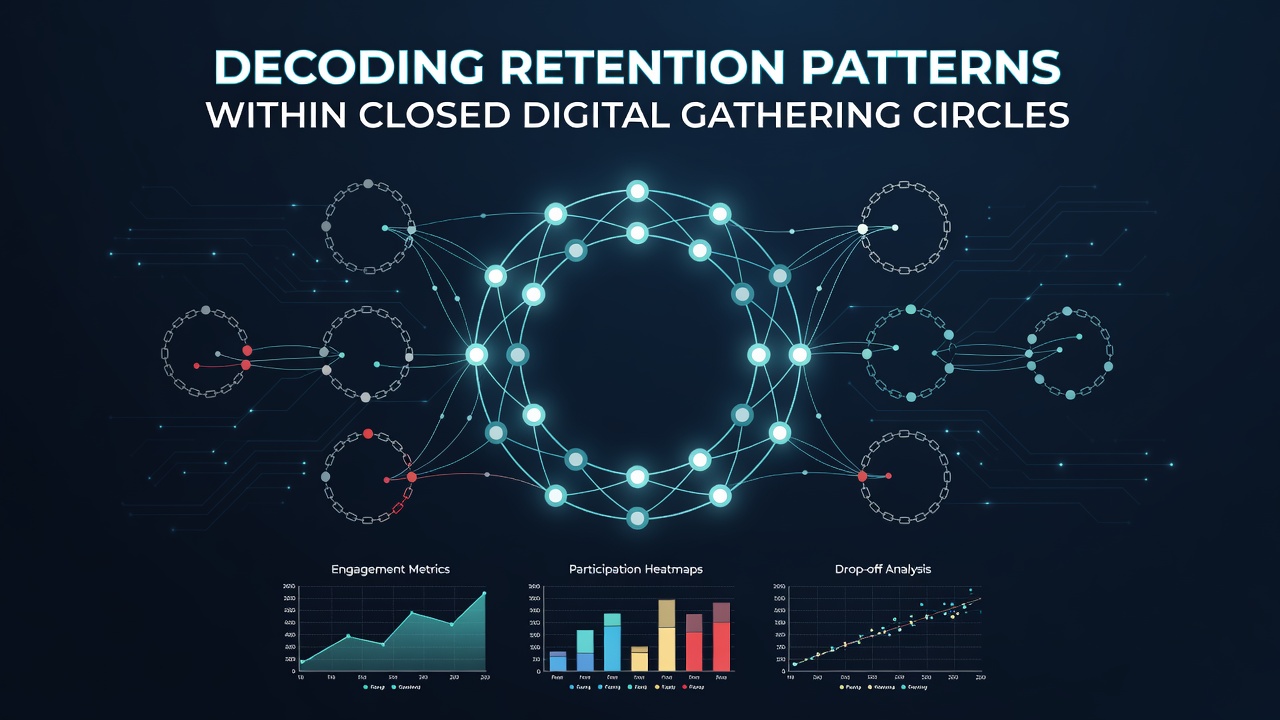
Closed digital gathering circles refer to private online spaces where members interact through invitation-only access, and researchers track how participation levels evolve across these environments over time. Data collected from platforms hosting such groups shows that initial sign-ups often peak within the first thirty days, yet sustained activity requires consistent triggers that keep members returning. Studies conducted across multiple regions reveal patterns where engagement clusters form around specific events or shared content themes, and these clusters correlate with longer membership durations.
Defining the Structure of Private Online Communities
Private forums, encrypted messaging channels, and members-only social networks operate under access controls that limit visibility to outsiders, which in turn shapes how retention data gets measured. Observers note that these circles differ from open platforms because participation metrics rely on internal logs rather than public analytics dashboards. According to findings from a multi-year analysis by Statistics Canada, closed groups with under one hundred active members demonstrate retention rates that stabilize around the forty-five percent mark after six months when regular moderation occurs. Larger circles exceeding five hundred participants, however, show faster initial growth followed by steeper drop-offs unless subgroup divisions emerge to maintain relevance for individuals.
Measuring Retention Through Activity Indicators
Retention patterns become visible when analysts examine repeat login frequency, message volume per user, and response times to shared prompts within these spaces. Figures from academic research at the University of Melbourne indicate that members who post at least twice weekly during the first quarter maintain connections for an average of fourteen months, whereas those with single monthly interactions depart after roughly four months. Platform operators often segment these metrics by cohort, revealing that September 2026 data sets highlighted a noticeable uptick in cross-device participation that extended session lengths by twenty-two percent compared to prior years.
Additional variables include notification settings and content scheduling, both of which influence whether members re-enter discussions promptly. Research teams have compiled heat maps that display daily activity spikes, and these visualizations demonstrate how evening hours in specific time zones sustain momentum across geographically dispersed circles.
Elements That Shape Ongoing Participation
Community guidelines, shared rituals, and leadership rotation appear repeatedly in datasets as contributors to prolonged membership. One examination of European digital networks found that circles incorporating weekly polls or collaborative projects retained seventy percent of their founding cohort past the one-year threshold. In contrast, groups lacking structured interaction saw half their members become inactive within the same period. External reports from the Australian Communications and Media Authority further document that privacy assurances and clear data-handling practices reduce early exits, particularly among users concerned about information leakage.
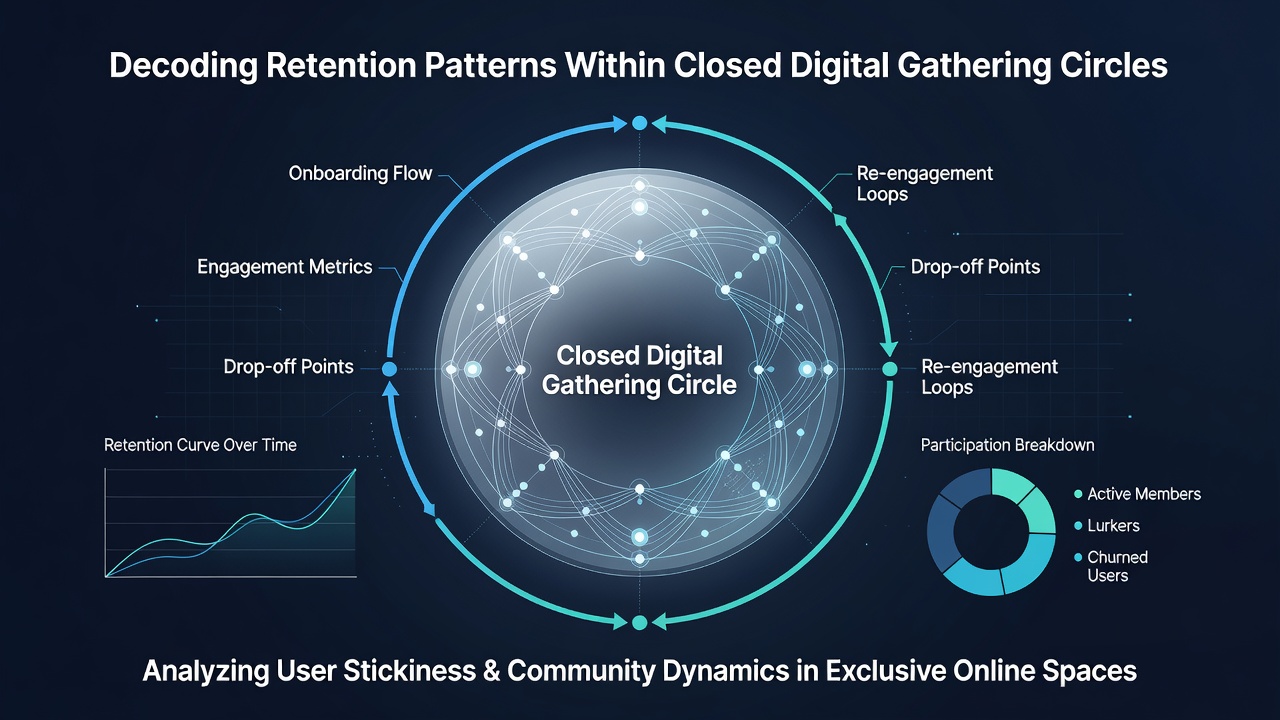
Seasonal factors also register in the records. Activity dips during holiday periods followed by rebounds when new discussion threads launch, and operators who anticipate these cycles through targeted prompts achieve steadier curves. Observers have tracked how integration of multimedia sharing tools correlates with higher reply rates, while text-only formats sometimes accelerate disengagement among younger demographics.
Comparative Data Across Platforms and Regions
Retention statistics vary by platform architecture and regional regulations that govern data collection. North American services frequently report higher churn in entertainment-focused circles, whereas professional or hobby-based groups in Asia maintain steadier participation when tied to offline events. A comparative study released in early 2026 by an international research consortium showed that circles using end-to-end encryption experienced slower but more loyal growth, with median membership spans reaching eighteen months versus twelve months in less secure environments.
Analysts continue to refine predictive models that combine login timestamps with sentiment analysis of posts. These models flag at-risk members weeks before departure, allowing administrators to intervene through personalized outreach that has proven effective in several documented cases.
Conclusion
Retention within closed digital gathering circles depends on measurable interactions, structural features, and external timing factors that researchers continue to quantify through longitudinal tracking. Patterns emerging from diverse data sources illustrate how initial engagement converts into sustained presence when communities implement consistent practices. As platforms evolve and new regulatory frameworks appear, the same analytical approaches will likely yield updated insights into membership longevity across these private spaces.