Ulrich Friedrich · 28 October 2026
Backend Load Distribution Strategies for Exclusive Virtual Event Networks
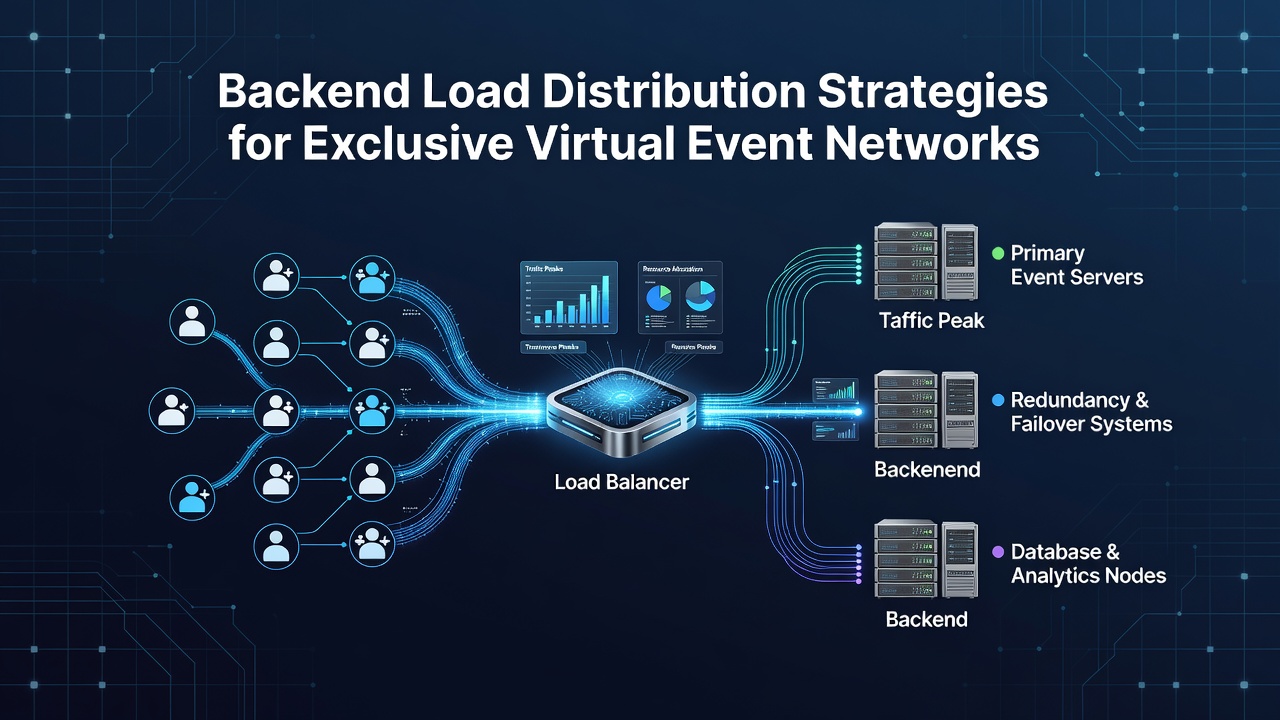
Exclusive virtual event networks operate under strict access controls that limit participation to invited users only, which creates unique demands on backend infrastructure when traffic spikes occur at scheduled start times. These networks rely on load distribution mechanisms to allocate incoming requests across multiple servers while maintaining session integrity and minimizing latency for participants scattered across different regions. Data from industry reports shows that such systems must handle unpredictable connection patterns that differ from open public platforms because each event draws a concentrated burst of activity from a pre-verified group.
Core Principles of Load Distribution in Restricted Environments
Backend systems for these networks apply algorithms that route traffic based on server health metrics, current connection counts, and geographic proximity rather than simple round-robin cycles alone. Observers note that least-connections methods prove effective when participant numbers remain below several thousand because they prevent any single node from becoming overwhelmed during the initial login surge. IP-hash techniques add consistency by directing returning users to the same server throughout an event session, which reduces database query overhead and supports features such as real-time polling or private chat rooms.
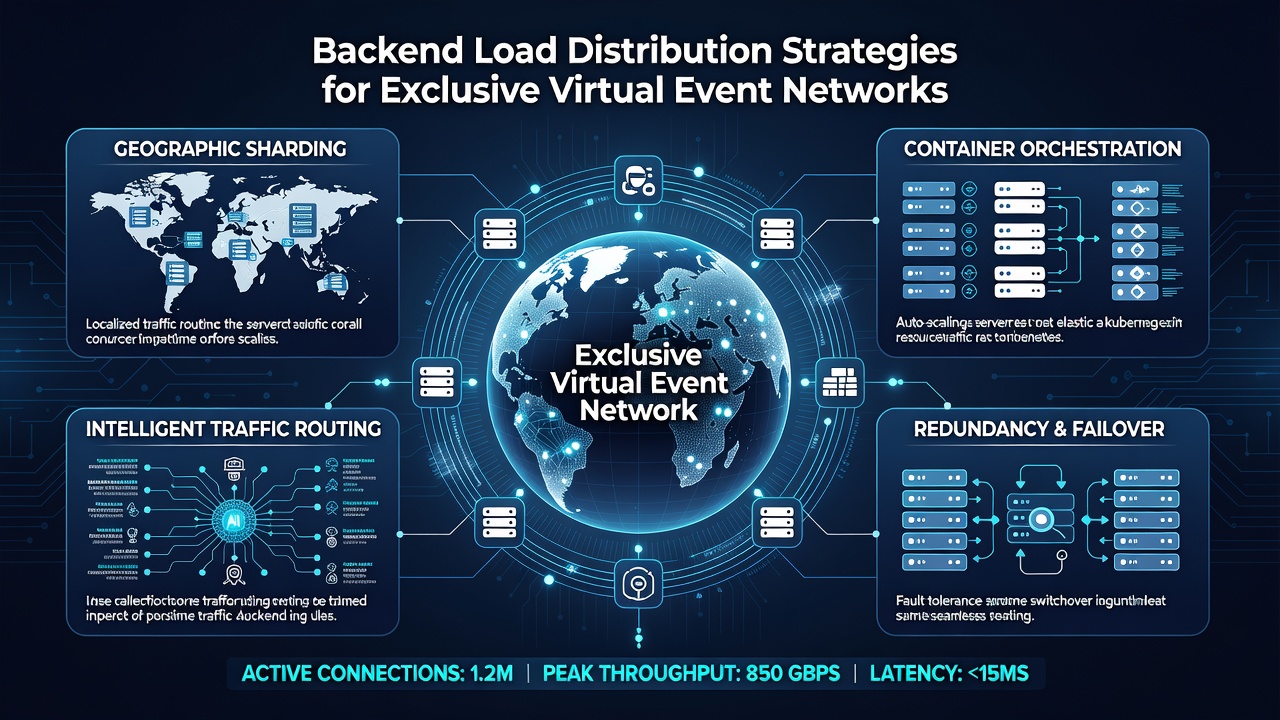
Researchers at institutions in Canada and Australia have examined how container orchestration platforms like Kubernetes integrate with these strategies to scale pods dynamically when event organizers announce start times months in advance. The approach allows clusters to provision additional resources minutes before doors open, then scale down once the gathering concludes, which aligns with cost-control requirements common in invitation-only setups.
Geographic and Failover Considerations
Multi-region deployments become necessary when exclusive networks span multiple continents because latency differences can disrupt synchronized activities such as live presentations or collaborative workshops. Load balancers positioned at edge locations forward requests to the nearest healthy data center while maintaining a global view of capacity. In October 2026 several major platforms plan to test enhanced anycast routing that automatically shifts traffic away from regions experiencing maintenance windows without interrupting active sessions.
Health checks run at sub-second intervals to detect node failures quickly, triggering immediate redistribution of connections to standby instances. This setup proved reliable in documented cases where one European research network maintained 99.97 percent uptime across twelve private conferences held between 2024 and 2025.
Integration with Access Control Layers
Because participation requires pre-approval, load distribution systems often sit behind authentication gateways that validate tokens before forwarding requests to application servers. This sequencing prevents unauthorized traffic from consuming backend resources yet introduces an additional processing step that must itself be load-balanced. Studies published by academic groups in the United States indicate that decoupling authentication microservices from core event logic allows independent scaling of each component during peak periods.
Rate-limiting policies tied to user roles further refine distribution decisions, ensuring that organizers or speakers receive priority routing while regular attendees share pooled capacity. Such policies appear in production environments operated by several North American virtual-event providers and have reduced average response times by measurable margins according to internal telemetry shared at technical conferences.
Emerging Techniques and October 2026 Outlook
Service mesh technologies now complement traditional load balancers by providing fine-grained traffic splitting at the application layer. Sidecar proxies collect detailed metrics on request durations and error rates, enabling automatic canary releases of new backend versions during live events without noticeable impact on attendees. European regulatory bodies tracking digital infrastructure resilience have highlighted these meshes as a recommended pattern for networks handling sensitive participant data.
Looking toward October 2026, projections from research consortia suggest increased adoption of AI-driven predictive scaling that anticipates event attendance based on RSVP patterns collected weeks earlier. This method could further reduce over-provisioning while still guaranteeing headroom for last-minute guest additions common in exclusive circles.
Conclusion
Backend load distribution for exclusive virtual event networks combines established algorithms with modern orchestration tools to meet the demands of controlled, high-concurrency gatherings. Geographic awareness, session persistence, and rapid failover remain foundational while newer approaches involving service meshes and predictive models gain traction. Organizations that implement these layered strategies continue to support reliable experiences even as event scales and participant expectations evolve through 2026 and beyond.